
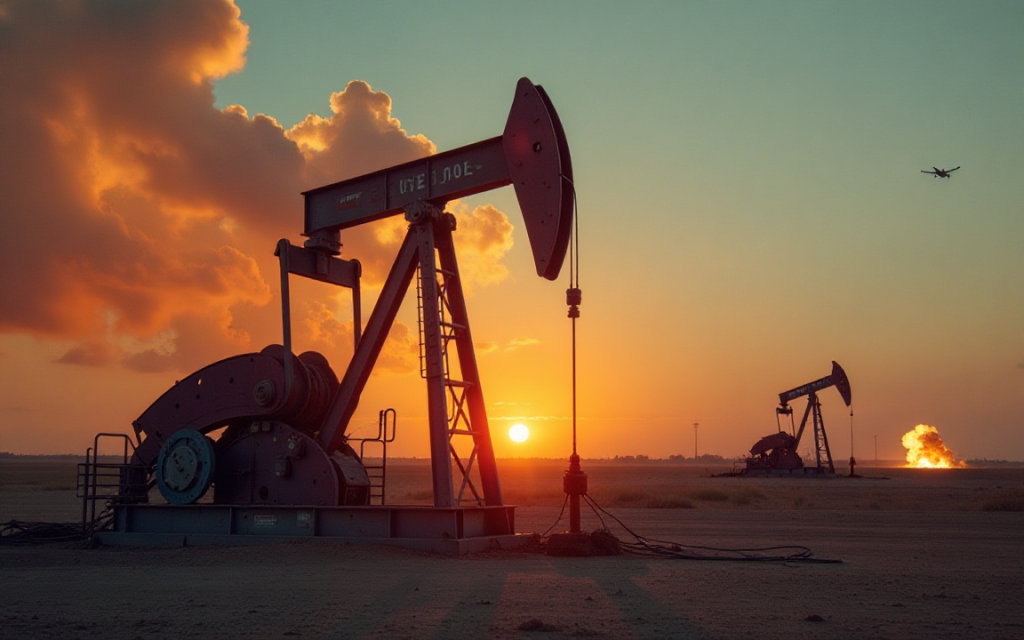
The Organization of the Petroleum Exporting Countries and allies are likely to proceed with their intended output pause during this weekend’s meeting, as evidence of a worldwide oil oversupply continues to mount, Bloomberg said in a report.
A monthly video conference is scheduled for January 4, where key members, notably Saudi Arabia and Russia, will meet to assess the decision—initially made in November—to maintain a freeze on supply increases throughout the first quarter, according to three delegates quoted in the report.
This pause follows a period of rapid production increases earlier in the year.
The policy was confirmed by the coalition at a gathering earlier this month and is expected to be reaffirmed at the upcoming meeting.
Oil’s struggles in 2025
Crude oil futures have experienced a significant downturn this year, registering a 17% decline and positioning them for their most substantial annual drop since the widespread economic disruption caused by the 2020 pandemic.
This sharp decline is primarily attributable to a fundamental imbalance in the global oil market: a surge in supply coinciding with a deceleration in world demand growth.
On the supply side, output has swelled considerably, stemming from both the OPEC+ coalition and its key non-member competitors, most notably the US.
Despite production cuts agreed upon by OPEC+ members, increased output from others has kept the market well-supplied.
Simultaneously, the pace of global oil demand growth has slowed, reflecting broader economic headwinds and, in some regions, a maturing post-pandemic recovery.
Concerns over persistent inflation, higher interest rates, and a sluggish manufacturing sector in major economies have dampened expectations for robust energy consumption.
Looking ahead, the consensus among key energy forecasters points toward a significant market surplus.
The International Energy Agency (IEA), a prominent voice in energy market analysis, is currently predicting a record glut for the upcoming year.
Even the OPEC secretariat, which historically tends to maintain a more optimistic or ‘bullish’ outlook on demand and market stability than other agencies, is projecting a modest but notable surplus.
This widespread expectation of oversupply reinforces the bearish sentiment currently dominating crude oil markets, suggesting that downward pressure on prices is likely to persist unless either supply is significantly curtailed or global economic activity accelerates sharply to boost demand.
Heightened geopolitical tensions
Amid escalating geopolitical uncertainty in global oil markets, the Organization of the Petroleum Exporting Countries and its partners are holding their most recent online meeting.
Venezuela, an OPEC member, has had to begin closing its oil wells.
This action is a direct result of a US-imposed blockade by President Donald Trump’s administration, which has involved seizing and pursuing tankers transporting Venezuelan crude.
Furthermore, attacks by Ukraine have targeted Russian oil infrastructure and tankers, also impacting Kazakhstan, another member of the alliance.
Rare public strain has emerged in the relationship between Saudi Arabia, the group’s leader, and its neighbor, the United Arab Emirates, specifically concerning the conflict in Yemen.
Riyadh publicly pressed the UAE on Tuesday to cease its support for armed groups operating within Yemen.
The decision by Saudi Arabia and its allies to quickly restore oil supplies—which had been halted since 2023—surprised oil traders in April, especially since world markets already appeared to be well-supplied.
The initial agreement was for a rapid restoration of 2.2 million barrels per day.
This was followed by a slower revival of a second layer, a process that was paused last month.
Approximately 1.2 million barrels per day from these two layers are still offline, partly because some nations are struggling to meet their pledged production increases.
The post OPEC+ likely to stick with current output levels as oversupply concerns mount appeared first on Invezz